
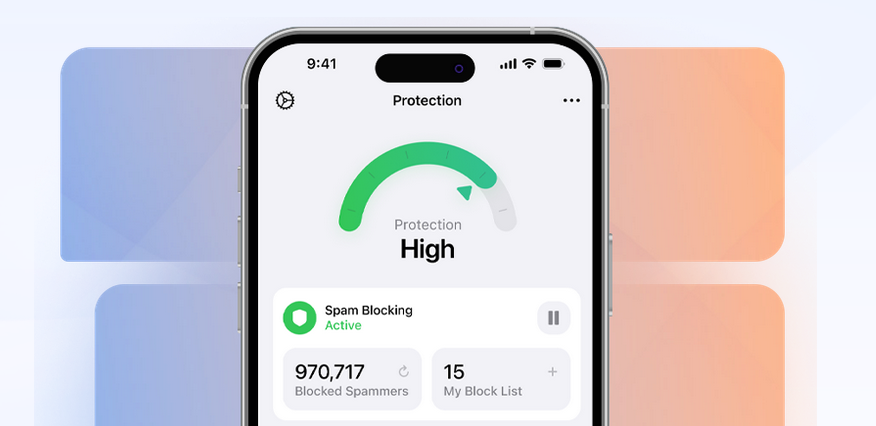
Prospective customers often ask a simple question: “How do we know if your Score service is any good?” It’s a fair question.
We’re happy to do a proof of concept, and when we do, everyone sees the quality and coverage of our spam list. But the simple answer is that the YouMail app, used by millions of people, relies on the exact same Score service. YouMail gets great reviews as a spam blocker, with this list at the heart of the free service. The only difference is a layer we built to distribute the list to the app efficiently.
The list will miss numbers used in extreme snowshoeing, since no spam list can cover all of them. But it catches almost everything else, and does so accurately.
What makes the list useful
We’ve focused on what should and shouldn’t be in a spam list used by a consumer service. There are three key things:
- Evidence for every number. Every number on the list has evidence of bad behavior, based primarily on the content of its communications and supplemented by behavior that definitively shows it is acting illegally or unlawfully. We don’t want to block Red Cross blood donation requests because they suddenly call at high volume, but we do want to block brand impersonators using toll-free numbers to fool people.
- No spoofed numbers. You don’t want to block grandma just because a bad actor spoofed her number. Since bad actors love spoofed numbers and often call just once from a number, it’s important to recognize when that’s happening and keep those numbers off the list.
- Only active callers. When a number goes quiet, it’s pulled from the list, so the list stays efficient and tied to active spam callers. It’s not about having 5 million numbers on the list — it’s about having the 500k numbers actively causing trouble at any given time.
If you’re building a consumer service, you want a spam list that’s evidence-based, accurate, and efficient — and one that’s blocked hundreds of millions of calls. That’s Score.